A deep dive into the three energy systems—ATP-PC, glycolytic, and aerobic—and how they fuel every workout. Learn how to train each system effectively to improve power, conditioning, and recovery.
Every movement you perform—whether it’s a heavy deadlift, a 400-meter sprint, or a long run—depends on one thing: ATP (adenosine triphosphate). ATP is the body’s immediate energy currency, but because muscles store only a very small amount, ATP must be constantly regenerated to keep you moving.
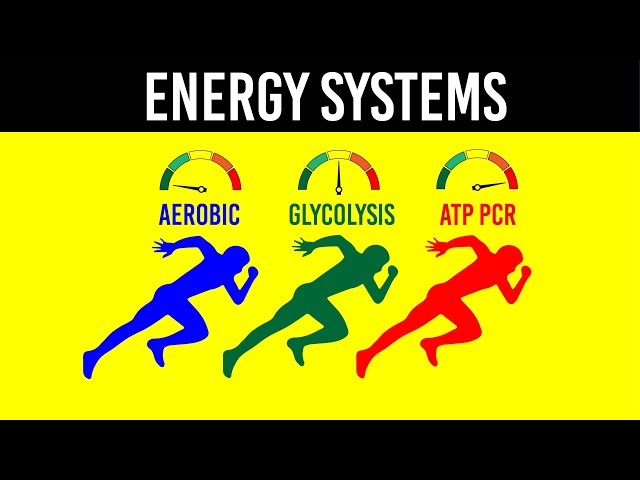
To do this, the body relies on three integrated energy systems:
- ATP-PC (Phosphagen) system
- Glycolytic (Anaerobic) system
- Oxidative (Aerobic) system
These systems are not separate switches that turn on and off. They are always working together. What changes is which system contributes the most depending on how hard and how long you’re working.
The ATP-PC System: Instant Power, Short Duration
The ATP-PC (phosphagen) system is your body’s fastest way to produce energy. It fuels very short, explosive efforts lasting roughly 0–10 (up to ~15) seconds, such as:
- Maximal sprints
- Heavy 1–3 rep lifts
- Jumps, throws, and Olympic lifts
What’s happening inside the muscle
Muscle cells store a small amount of ATP along with phosphocreatine (PCr). When ATP is broken down to release energy, PCr rapidly donates a phosphate group to regenerate ATP. This process:
- Does not require oxygen
- Produces almost no metabolic by-products
- Happens extremely fast
The limitation is capacity. ATP and PCr stores are tiny, which is why power output drops quickly once they are depleted.
Key characteristics
- Dominates maximal efforts under ~10 seconds
- Produces energy at the highest possible rate
- Requires long rest periods for full recovery (mostly 3–5 minutes)
How to train the ATP-PC system
Training this system requires maximal intensity and complete recovery.
- Maximal sprints:
6–10 seconds all-out (20–40 m), 2–4 minutes rest, 5–10 reps - Heavy strength work:
1–5 reps at 85–100% 1RM with 2–5 minutes rest - Plyometrics and explosive throws:
Low reps (3–5) with long rest
Adaptations you are aiming for
- Increased phosphocreatine stores
- Faster PCr resynthesis
- Better fast-twitch fiber recruitment
- Improved neuromuscular efficiency
The Glycolytic (Anaerobic) System: High Output Under Fatigue
The glycolytic system fuels high-intensity efforts lasting roughly 10–90 seconds, such as:
- 200–400 m sprints
- Hard bike or row intervals
- Long, demanding sets in the gym
- CrossFit-style work bouts
What’s happening inside the muscle
This system breaks down glucose or glycogen through glycolysis to rapidly produce ATP without oxygen. During this process, lactate and hydrogen ions (H⁺) are produced. The hydrogen ions lower muscle pH, which contributes to fatigue and the burning sensation.
Lactate itself is not the problem—it can be reused as fuel. The real limiter is acidity.
How to train the glycolytic system
- Lactate tolerance intervals:
20–60 seconds hard, 1–2 minutes rest, 6–12 rounds - Longer anaerobic intervals:
60–90 seconds work, 2–4 minutes rest, 4–8 rounds - Resistance circuits:
30–45 seconds time under tension with short rest
Adaptations you are aiming for
- Increased glycolytic enzyme activity
- Improved buffering of acidity
- Better lactate transport and clearance
- Faster recovery between hard bouts
The Oxidative (Aerobic) System: The Endurance and Recovery Engine
The oxidative system dominates efforts lasting several minutes to hours and supports nearly all low-intensity activity and recovery.
What’s happening inside the muscle
Using oxygen, this system produces ATP from carbohydrates and fats via the Krebs cycle and electron transport chain. ATP production is slower, but the yield is massive.
How to train the oxidative system
- Aerobic base (Zone 2):
30–60+ minutes easy–moderate, conversational pace - Tempo training:
10–30 minutes comfortably hard - Aerobic intervals:
3–8 minutes strong but sustainable
Adaptations you are aiming for
- More and larger mitochondria
- Improved oxygen delivery
- Greater fat oxidation
- Better recovery between high-intensity efforts
How the Energy Systems Work Together
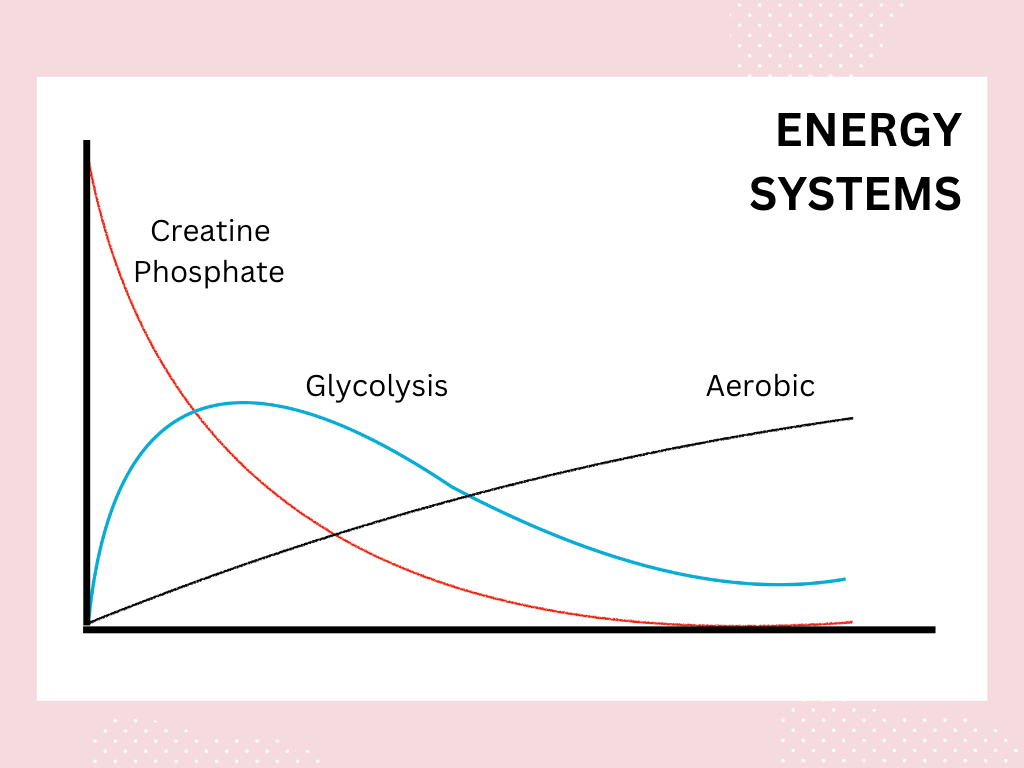
All three energy systems are always active. What changes is their relative contribution over time.
- ATP-PC: Dominates at the start of maximal efforts
- Glycolytic: Takes over during short, intense work
- Oxidative: Becomes dominant as duration increases
The goal of training is not to isolate one system, but to bias one while supporting the others.
Final Takeaway
Performance improves when you understand how the energy systems interact and train them deliberately.
- Power comes from the ATP-PC system
- Fatigue resistance comes from the glycolytic system
- Recovery and longevity come from the oxidative system
Train all three, and you build a complete engine.
Yosri Gam
Member of the Harissa Fit Club team, sharing insights and inspiration for your fitness journey.
View All Posts