A clear, evidence-based breakdown of why modern nutrition guidelines are moving away from carb-heavy food pyramids toward protein-first, minimally processed eating for better metabolic health, weight control and long-term wellbeing.
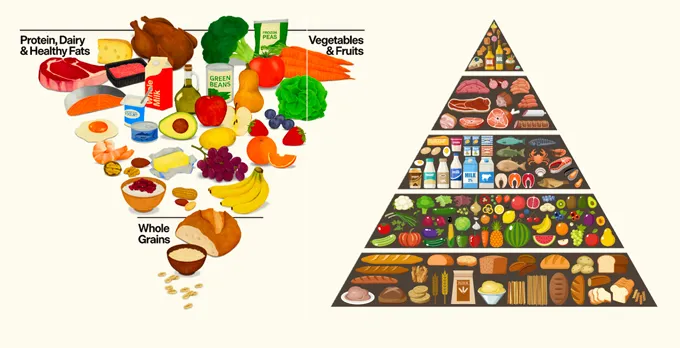
A protein-first food pyramid represents a major shift away from the traditional carb-heavy model that placed bread, pasta and cereals at the base of daily eating. The newer approach centers on high-quality protein, healthy fats and minimally processed foods, driven by modern evidence on satiety, weight control, blood sugar regulation and metabolic health.
This evolution reflects decades of nutritional research showing that food quality, protein adequacy and processing level matter far more than simply reducing fat or maximizing carbohydrate intake.
Background reading:
Old food pyramid overview
Old vs newer pyramids
Why recommendations changed
1. The old carb-heavy food pyramid
The classic USDA Food Pyramid (1992–2010) built its wide base on grains, recommending 6–11 daily servings of bread, rice, cereals and pasta. Fruits and vegetables occupied the middle, while dairy and protein foods sat above them. Fats and sweets were pushed to the tiny top, reinforcing the idea that fat should be minimized.
This structure implicitly encouraged high carbohydrate intake, often from refined sources, while discouraging fat intake regardless of fat quality.
Key characteristics:
- High-carbohydrate, low-fat, moderate-protein pattern promoted for heart health and weight control.
- Little distinction between refined grains and whole grains.
- No meaningful differentiation between healthy fats (olive oil, nuts) and unhealthy fats (trans fats).
- Ultra-processed foods were not clearly identified as problematic.
Breakdown of the old pyramid
Old vs new carb and fat quality
2. Scientific problems with the old pattern
The grain-heavy base made it easy to overconsume refined starches and sugars, especially white bread, white rice, cereals and packaged snacks. Over time, large observational studies and randomized trials linked this pattern to higher risks of obesity, type 2 diabetes and cardiovascular disease.
Key evidence against the old pattern:
- High refined carbohydrate intake, particularly white rice, is associated with increased type 2 diabetes risk (pooled relative risk ≈ 1.33).
- Carbohydrate intake above ~65–70% of total calories, especially with high glycemic load, raises diabetes risk.
- Each additional 100 g/day of starch or added sugar is linked to greater long-term weight gain.
- Ultra-processed food consumption is associated with higher obesity rates, cardiovascular disease and mortality.
Refined carbs & diabetes meta-analysis
Carbohydrate percentage & diabetes risk
Added sugar, starch & weight gain
Ultra-processed foods & CVD risk
3. The new protein-focused food pyramid
Newer food pyramids and dietary guidelines emphasize high-quality protein at every meal, combined with vegetables, moderate fruit intake and healthy fats. Refined starches, sugary drinks and ultra-processed foods are minimized rather than forming the foundation of the diet.
Many modern recommendations suggest protein intakes around 1.2–1.6 g per kg of body weight per day, well above the old minimum of 0.8 g/kg, particularly for adults seeking fat loss, metabolic health or healthy aging.
Core features:
- Base built from minimally processed proteins, vegetables, some fruit and healthy fats.
- Protein sources include meat, fish, eggs, dairy, legumes, nuts and seeds.
- Refined carbohydrates and ultra-processed foods moved to an “eat rarely” category.
- Greater emphasis on food quality, satiety and blood sugar control.
New US guidelines emphasizing protein
News explainer on protein and full-fat dairy
Overview of the new protein-focused pyramid
4. Scientific evidence for higher-protein diets
Higher-protein diets (typically 25–30% of total energy, or ~1.2–1.6 g/kg/day) consistently improve satiety, reduce spontaneous calorie intake and support weight loss compared with higher-carbohydrate, standard-protein diets.
In healthy individuals, randomized trials lasting 6–12 months show no adverse effects on kidney or liver function at these protein intakes. However, people with existing kidney disease should follow individualized medical guidance.
Main findings:
- 6-month RCT: high-protein (~1.3 g/kg) diets produced greater weight loss and triglyceride reduction than standard-protein diets, with normal kidney and liver markers.
- 1-year crossover trial: very high protein intake (2.5–3.3 g/kg/day) showed no negative effects on blood lipids, liver or kidney health in resistance-trained men.
- Meta-analyses show improvements in triglycerides and metabolic syndrome markers with higher protein intake.
High-protein vs standard-protein RCT
1-year high-protein safety trial
Protein intake & metabolic health review
5. Old vs new model: a balanced judgment
The old pyramid helped reduce trans fat intake and encouraged fruit and vegetable consumption, but it overemphasized grains, underestimated protein needs and failed to warn against ultra-processed foods.
The newer protein-focused model better reflects modern evidence by prioritizing food quality, adequate protein, healthy fats and fiber-rich plant foods while minimizing refined carbohydrates and ultra-processed products.
Who benefits most:
- People with overweight, insulin resistance or prediabetes
- Those with high triglycerides or metabolic syndrome
- Older adults seeking to preserve muscle mass
The optimal long-term approach still balances high-quality protein, plenty of vegetables, adequate fiber, some fruit, healthy fats and mostly whole-food carbohydrate sources, while keeping sugary drinks and ultra-processed foods low.
Harvard Healthy Eating Pyramid
Why the pyramid shifted
Related coverage:
For a detailed news report on the changes to the U.S. dietary guidelines and the debate around the new food pyramid, visit USA Today’s full article here .
Yosri Gam
Member of the Harissa Fit Club team, sharing insights and inspiration for your fitness journey.
View All Posts